Origins: The Great Depression and the New Deal
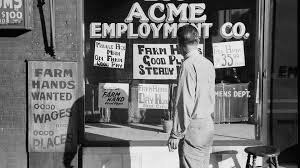
The modern U.S. public assistance system has its roots in the 1930s. With the economic collapse of the Great Depression, many Americans faced unemployment, poverty, and severe food insecurity. In response, the federal government under Franklin D. Roosevelt initiated a series of programs known collectively as the New Deal.
 A landmark piece of legislation was the Social Security Act of 1935, signed August 14 1935, which “provides for the general welfare by establishing a system of federal old-age benefits … and … enable[s] the several States to make more adequate provision for aged persons, blind persons, dependent and crippled children, maternal and child welfare, public health …” National Archives+2National Archives+2
Under Title IV of that Act, the program called Aid to Dependent Children (ADC) was created — matching federal grants to states for children deprived of parental support. Over time that would become the well-known welfare cash payment system. ASPE+2ASPE+2
These early programs marked a fundamental shift: the federal government accepted a lasting role in supporting those in need, rather than leaving relief solely to local authorities or private charity.
Cash Assistance: “Welfare” as Income Support
From the 1930s through the late 20th century, one of the principal cash welfare programs was Aid to Families with Dependent Children (AFDC), formerly ADC. The federal law permitted states to administer the program, set benefit levels (within limits), and define “need.” GovInfo+1
Key features and turning-points:
- Enrollment expanded greatly in the 1960s–70s with increases in eligibility and more inclusion of different families. GovInfo+1
- Courts challenged state practices: e.g., King v. Smith (1968) held AFDC could not be denied just because a “substitute father” visited on weekends. Wikipedia
- In August 1996, the Personal Responsibility and Work Opportunity Reconciliation Act (PRWORA) replaced AFDC with the Temporary Assistance for Needy Families (TANF) block-grant program effective July 1 1997. Center on Budget and Policy Priorities+1
TANF shifted the model: rather than a federal entitlement to cash assistance, it gives states block grants, imposes work requirements, time limits, and gives states more flexibility. Sage Journals
Nutrition Assistance: The Food Stamp Program / SNAP
Another major pillar of public assistance is food and nutrition support. The program we now know as the Supplemental Nutrition Assistance Program (SNAP) began in pilot form in the late 1930s. According to the United States Department of Agriculture (USDA) history:
- In 1939, the first food stamp transactions occurred in Rochester, New York. USDA Food and Nutrition Service+1
- The Food Stamp Act of 1964 made the Food Stamp Program permanent. USDA+1
- The Food and Agriculture Act of 1977 eliminated the purchase requirement and established nationwide uniform eligibility standards. USDA+1
- Transition toward electronic benefits: by 2004 all states used Electronic Benefit Transfer (EBT) systems. USDA+1
- The name changed officially to SNAP in October 2008. USDA Food and Nutrition Service
SNAP today serves tens of millions of Americans, helping reduce hunger, improve nutrition, and lift people out of poverty. For example, researchers at the Center on Budget and Policy Priorities (CBPP) estimate that SNAP lifts about 8 million people (including 4 million children) out of poverty in a given year and helps another 26 million come closer to the poverty line. Center on Budget and Policy Priorities
Other Key Public Assistance Programs
- Programs such as Medicaid and Medicare (both signed into law 1965 under President Lyndon B. Johnson) expanded health coverage for low-income families, children, elderly and disabled. Wikipedia+1
- Programs for maternal and child welfare: for example the Sheppard–Towner Act (1921) was an early federal initiative to promote maternity and infant care. Wikipedia
 Trends, Changes & Tensions

Over time the U.S. welfare/state assistance system has grappled with evolving social, political, and economic pressures:
Growth and expansion (1960s–70s):
- As participation in AFDC and other programs rose, public spending increased sharply. GovInfo+1
- Nutrition assistance (food stamps) expanded geographically and in eligibility.
- Growing awareness of hunger, malnutrition, and child welfare: e.g., the White House Conference on Food, Nutrition, and Health (1969) brought together activists, scholars, and policymakers to propose sweeping nutrition and health programs. Wikipedia
Reforms, tightening, and debates (1980s–1990s+):
- Work-requirements, time limits, and stricter eligibility began to be more prominent.
- With TANF, the shift from entitlement to block-grant marked a major ideological and structural change.
- Nutrition assistance also continues to be debated (eligibility, benefit levels, administration).
- Researchers have studied issues such as whether welfare creates “disincentives” for work or whether the system helps promote long-term well-being. arXiv+1
Modern era & recent developments:
- The U.S. continues to confront food insecurity, poverty, and disparities in access to assistance.
- The efficiency, adequacy, stigma, and coverage of programs like SNAP and TANF remain contested.
- Technological modernization (EBT cards, online enrollment) and data-driven evaluation have changed delivery.
- As conditions change—economy, demographics, cost of living—public assistance programs must adapt.
Why It Matters
Public assistance programs play a dual role: they provide immediate relief (food, cash, health services) and invest in human capacity (nutrition, education, health, opportunity). For example, studies suggest that children in counties where food stamps were available earlier had higher high-school-completion rates and better adult outcomes. Center on Budget and Policy Priorities
From a ministry or faith-based perspective (noting your interest in living out Christian values), the history reminds us:
- Many of these programs were born of social moral concern: hunger, child welfare, poverty.
- The “least of these” (children, families, the vulnerable) have been central.
- There are ongoing questions: how do we design a system that offers dignity, fosters empowerment, encourages work and flourishing, without perpetuating dependency?
- Understanding the history helps identify what’s worked, what hasn’t, where gaps remain—and how public policy, community ministry, and citizenship intersect.
Key Milestones Summary
| Year | Milestone | Significance |
|---|---|---|
| 1935 | Social Security Act | Federal aid for aged, blind, dependent children begins. National Archives+1 |
| 1939 | First food-stamp transaction (pilot) | Early hunger relief via federal food stamps begins. USDA Food and Nutrition Service+1 |
| 1964 | Food Stamp Act | Permanent federal food stamp program. USDA+1 |
| 1977 | Food & Agriculture Act | Major food-stamp reform—purchase requirement removed; uniform standards. USDA+1 |
| 1996 | PRWORA signed; TANF created | Major welfare reform; shift in cash assistance model. Center on Budget and Policy Priorities+1 |
| 2004 | All states use EBT for food assistance | Modernization, reduced stigma/fraud. USDA |
Challenges & Reflection
While the U.S. public assistance system has made significant strides, many challenges remain:
- Adequacy of benefits: For many households, cash or food benefits are still modest relative to need.
- Access & eligibility hurdles: Administrative burdens, changing rules, state-by-state variation make access uneven.
- Stigma and culture: Welfare has been subject to public perceptions of dependency, “welfare queens,” etc.—which affect policy and attitudes.
- Work vs assistance tension: Balancing relief with incentives for employment, education, self-sufficiency remains difficult.
- Changing economy and demographics: As work patterns, family structures, cost of living shift, the system must adapt.
- Coordination across programs: Food assistance, health, housing, employment training—the array of supports are plentiful but often siloed.
From a faith-based vantage point, there is a call to engage in how public assistance intersects with volunteering, local ministry, advocacy for children and families, ensuring dignity and flourishing rather than only survival.
Conclusion
The history of welfare and public assistance in the U.S. is not a simple story of “handouts.” It reflects evolving ideas about government, responsibility, poverty, and human dignity. From the New Deal to SNAP to welfare reform, the journey shows how societies answer the question: What do we owe one another?
For your podcast or blog, you might consider focusing on one of the following:
- The evolution of food assistance (from stamps to SNAP) as a case-study.
- How cash welfare changed with TANF and what that means for families today.
- The intersection of public policy, faith/values, and community ministry in assisting vulnerable populations.
- Personal stories or statistics of impact: e.g., how SNAP has lifted children out of poverty.
welfare, food stamps, SNAP, and other public assistance
============================ Sources:
📜 Government & Official Historical Sources
- National Archives — Social Security Act of 1935
https://www.archives.gov/milestone-documents/social-security-act - U.S. Department of Agriculture (USDA) — SNAP/Food Stamp Program History and Evolution
- U.S. Government Publishing Office (GPO / govinfo.gov) — Congressional Reports on Welfare History and Reform
- U.S. Department of Health & Human Services (HHS / ASPE) — A Brief History of the AFDC Program
https://aspe.hhs.gov/sites/default/files/private/pdf/167036/1history.pdf
📚 Research & Policy Analysis
- Center on Budget and Policy Priorities (CBPP) — SNAP and TANF Impact & Reform Studies
- SAGE Knowledge / The Social History of the American Family — Overview of TANF and Welfare Reform
https://sk.sagepub.com/ency/edvol/embed/the-social-history-of-the-american-family/chpt/tanf - arXiv — Research on Welfare Incentives and Policy Outcomes
https://arxiv.org/abs/2202.03413
⚖️ Legal & Historical Cases
- Wikipedia (summaries of major cases and legislation):
- King v. Smith (1968) — https://en.wikipedia.org/wiki/King_v._Smith
- Sheppard–Towner Act (1921) — https://en.wikipedia.org/wiki/Sheppard%E2%80%93Towner_Act
- White House Conference on Food, Nutrition, and Health (1969) — https://en.wikipedia.org/wiki/White_House_Conference_on_Food%2C_Nutrition%2C_and_Health
🌍 Background Reading / Contextual Reference
- Wikipedia (German) — Poverty in the United States (Armut in den Vereinigten Staaten)
https://de.wikipedia.org/wiki/Armut_in_den_Vereinigten_Staaten
Variety of material covered: news, current events, religion, sports, talk.
The Shawn P Greene Show (2025-10-26)
http://www.shawnpgreene.com
Discover more from Shawn Patrick Greene
Subscribe to get the latest posts sent to your email.


 Shawn Patrick Greene